


You do not need to spend $800 to get real espresso at home. Every machine on this list extracts at the 9 bars of pressure that actually matters, and every one was street-priced under $500 when we checked in November 2026.
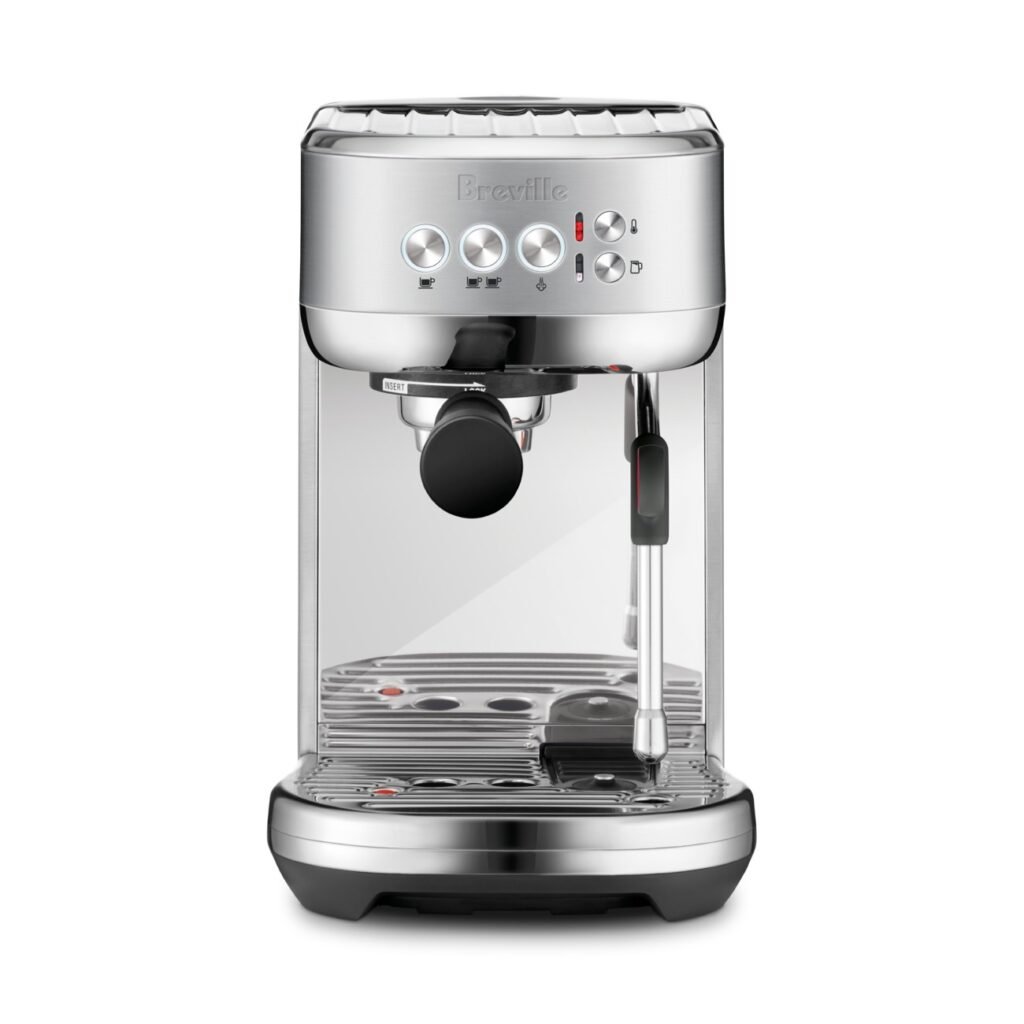
The short answer: get the Breville Bambino Plus if you want cafe-style milk drinks with almost no learning curve. Get the Gaggia Classic Pro E24 if you enjoy tinkering and want a machine that can grow with you for a decade. Get the regular Breville Bambino if you want the same shot quality as the Plus for about $200 less and you are willing to steam your own milk.
One honest warning before the list: none of these six machines has a built-in grinder, and the grinder matters as much as the machine. Budget another $80 to $150 for a decent burr grinder, or start with the pressurized baskets most of these include, which are forgiving with pre-ground coffee. If you want the wider picture first, our full guide to the best espresso machines for home use covers every budget tier.
Updated November 2026. Prices move fast during Black Friday week, so every pick below was checked against its current street price, not its launch price.
Quick Comparison Table (Ranked)
| # | Machine | Street price | Standout feature | Best for |
|---|---|---|---|---|
| #1 | Breville Bambino Plus | $400–500 | Automatic milk texturing, 3-sec heat-up | Beginners, milk drinks |
| #2 | Breville Bambino | $250–300 | Same shots as the Plus, manual wand | Best value |
| #3 | Gaggia Classic Pro E24 | $449–499 | 58mm portafilter, brass boiler | Enthusiasts, modders |
| #4 | Flair NEO Flex | ~$99 | Hand-pulled lever espresso with gauge | Manual control, tiny budgets |
| #5 | De’Longhi Dedica Arte | $250–300 | 6 inches wide, manual steam wand | Small kitchens |
| #6 | De’Longhi Stilosa EC260BK | $100–150 | Real 15-bar pump, steel boiler | Cheapest real pump machine |
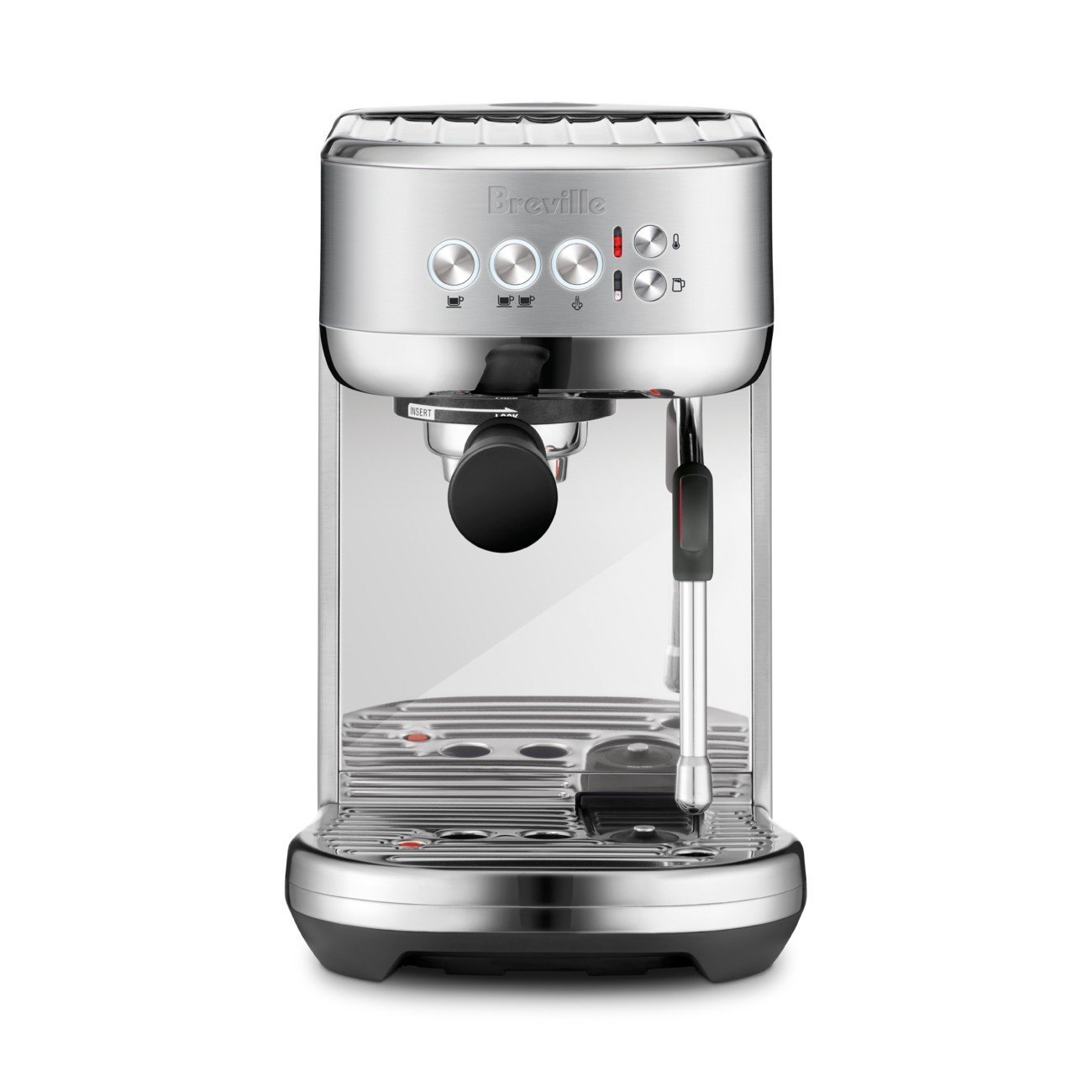
1. Breville Bambino Plus — the beginner gold standard
Ask the espresso community which machine a beginner should buy and the Bambino Plus is the name that comes back most often. Its ThermoJet system is ready in about 3 seconds, electronic PID control keeps shots consistent instead of drifting sour or bitter, and the automatic milk texturing (three temperatures, three texture levels, self-purging wand) turns flat whites into a weekday routine instead of a weekend project.
Pros:
- Ready in about 3 seconds (ThermoJet heating)
- Automatic milk texturing with 3 temperatures and 3 texture levels
- PID temperature control for consistent shots
- 54mm stainless portafilter, 18g dose, 1.9L water tank
Cons:
- $499.95 list price sits at this list’s ceiling; best bought on its frequent promotions
- No 3-way solenoid valve, so pucks come out a little soupy
- No built-in grinder
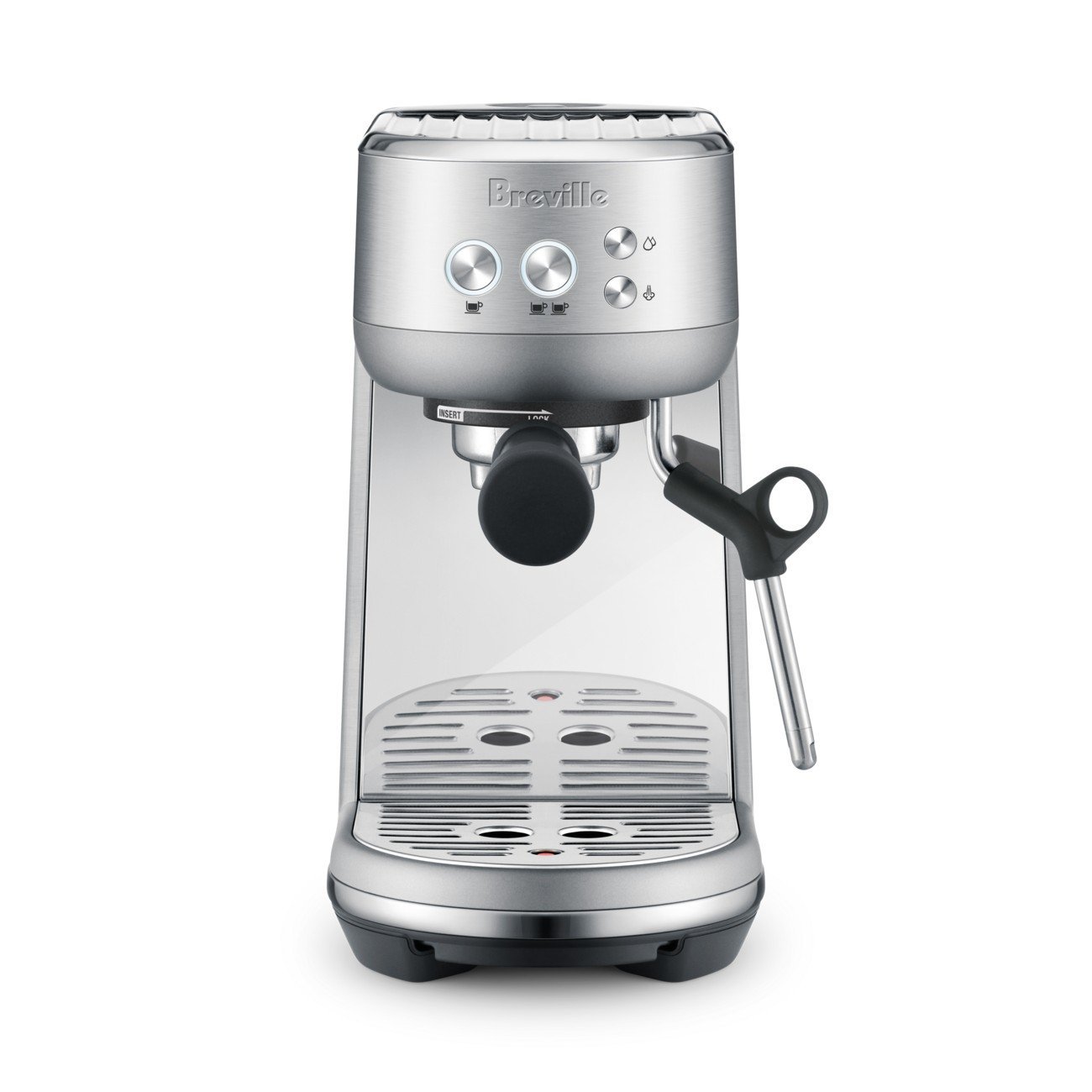
2. Breville Bambino — the same shots for much less
The regular Bambino shares everything that decides the shot: the same ThermoJet heating, the same PID control, the same 54mm portafilter and the same 9-bar extraction. What you give up is automation: milk is steamed with a manual wand and the tank shrinks to 1.4L. For straight espresso drinkers that trade is easy money, and the roughly $200 saved covers the burr grinder this machine still needs.
Pros:
- Same ThermoJet heat-up and PID shot quality as the Plus
- About $200 cheaper than the Bambino Plus
- 54mm portafilter with an 18–19g dose
- 3-second heat-up, 15-bar pump with 9-bar extraction
Cons:
- Manual milk texturing takes a week or two of practice
- Smaller 1.4L tank needs more refills for a household
- No built-in grinder
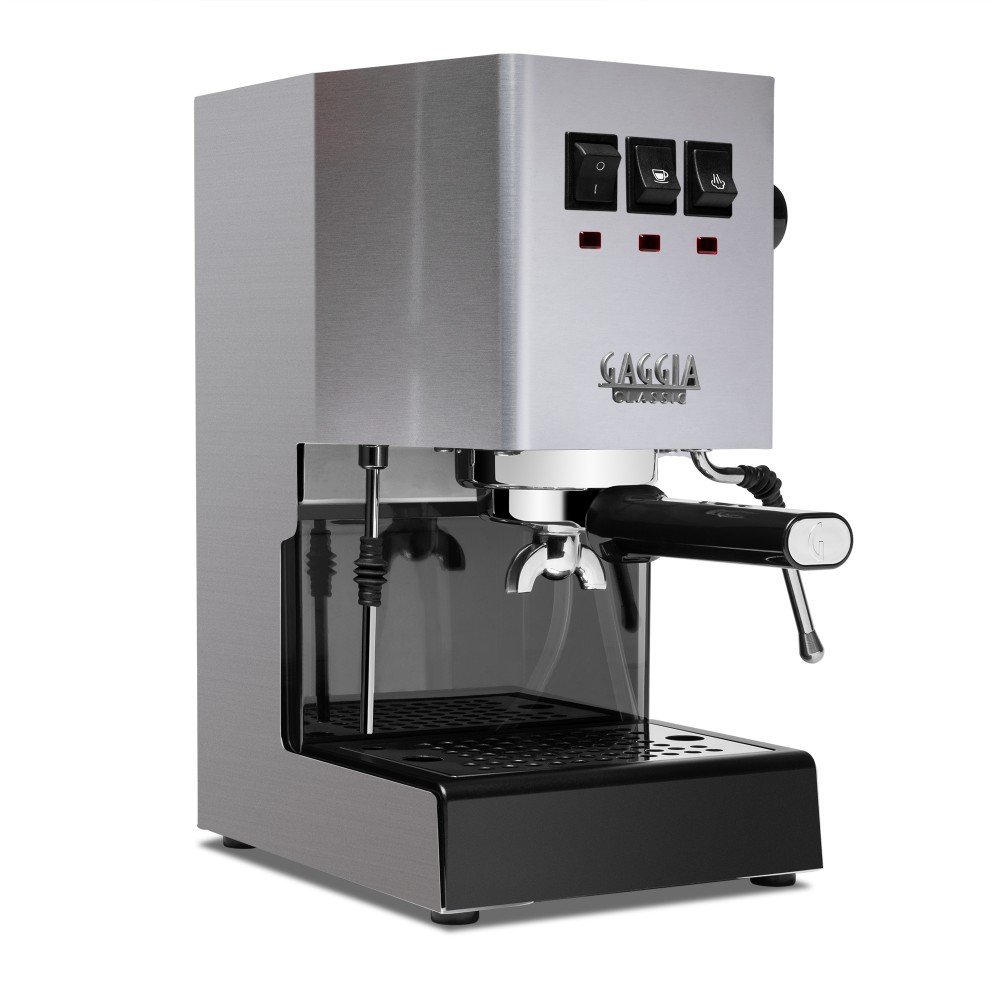
3. Gaggia Classic Pro E24 — the one you can mod forever
The Gaggia Classic line has been the enthusiast’s starter machine for decades because it is built like small commercial equipment: a 58mm stainless portafilter (the cafe standard, with the biggest accessory ecosystem in home espresso), a 3-way solenoid valve, and a deep catalogue of upgrades when you outgrow the stock setup. Buy the current E24 specifically: it moved to an uncoated brass boiler after the 2023 Evo Pro’s coated boiler drew widespread flaking complaints. The stainless E24 linked here is the version that stays in budget.
Pros:
- 58mm commercial portafilter, the biggest accessory ecosystem
- Uncoated brass boiler skips the Evo Pro flaking problem
- 3-way solenoid valve for dry pucks and backflushing
- Deep modding scene: PID kits, pressure springs, upgrades
Cons:
- Thermostat control: shot temperature wanders more than the PID Brevilles
- Some colour variants are priced over $500; stainless is the in-budget one
- No PID and no built-in grinder
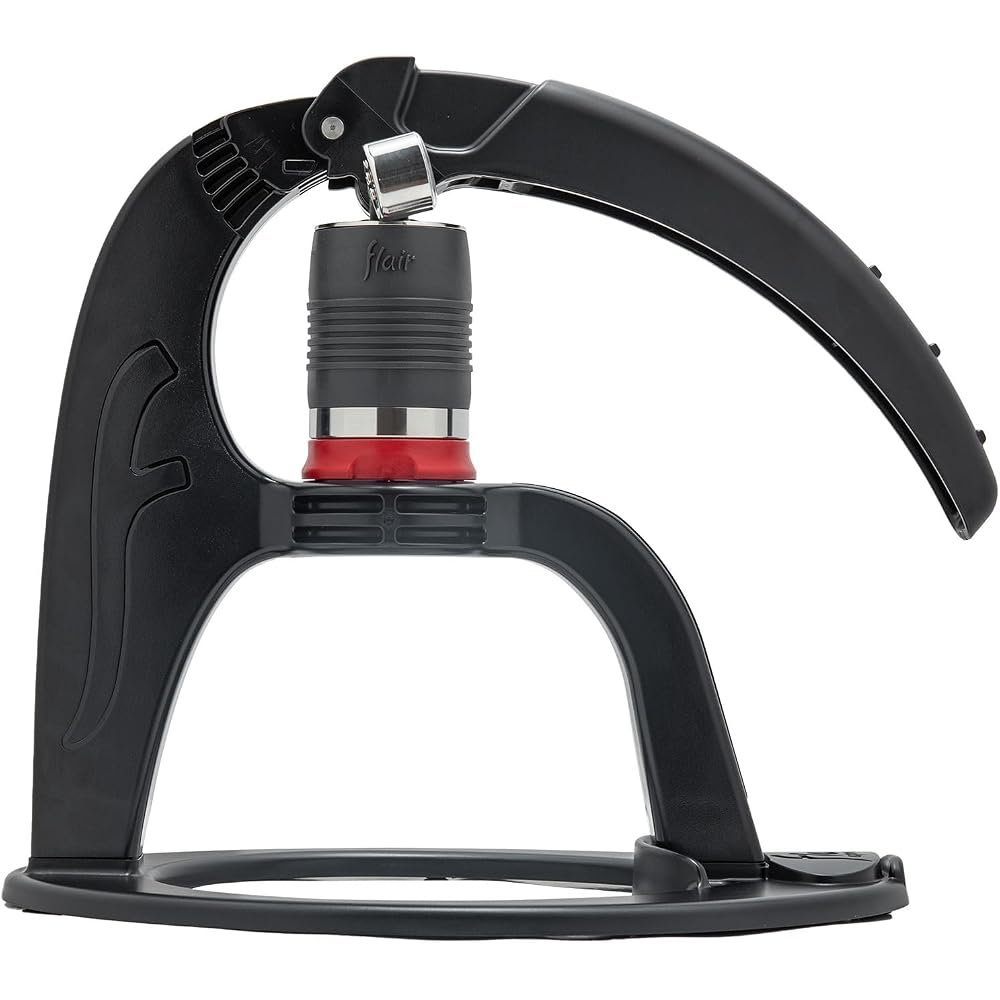
4. Flair NEO Flex — real espresso, pulled by hand, for $99
The NEO Flex has no pump, no boiler and no electronics. You add just-boiled water, pull the lever, and an integrated pressure gauge shows the 6 to 9 bars you are generating with your own arm. It sounds like a gimmick until you taste the shot: with fresh beans and a good grinder, owners routinely pull espresso that embarrasses machines three times the price. It ships with two portafilters, a flow-control one that forgives pre-ground coffee and a bottomless one for when your technique improves, and the 2024 version needs no preheating.
Pros:
- Real 6–9 bar espresso for about $99
- Integrated pressure gauge makes pulls repeatable
- Two portafilters included: flow-control and bottomless
- No electricity needed; 2024 version needs no preheating
Cons:
- No steam wand at all, so no milk drinks
- A ritual every time: boil, pull, clean up
- No grinder included
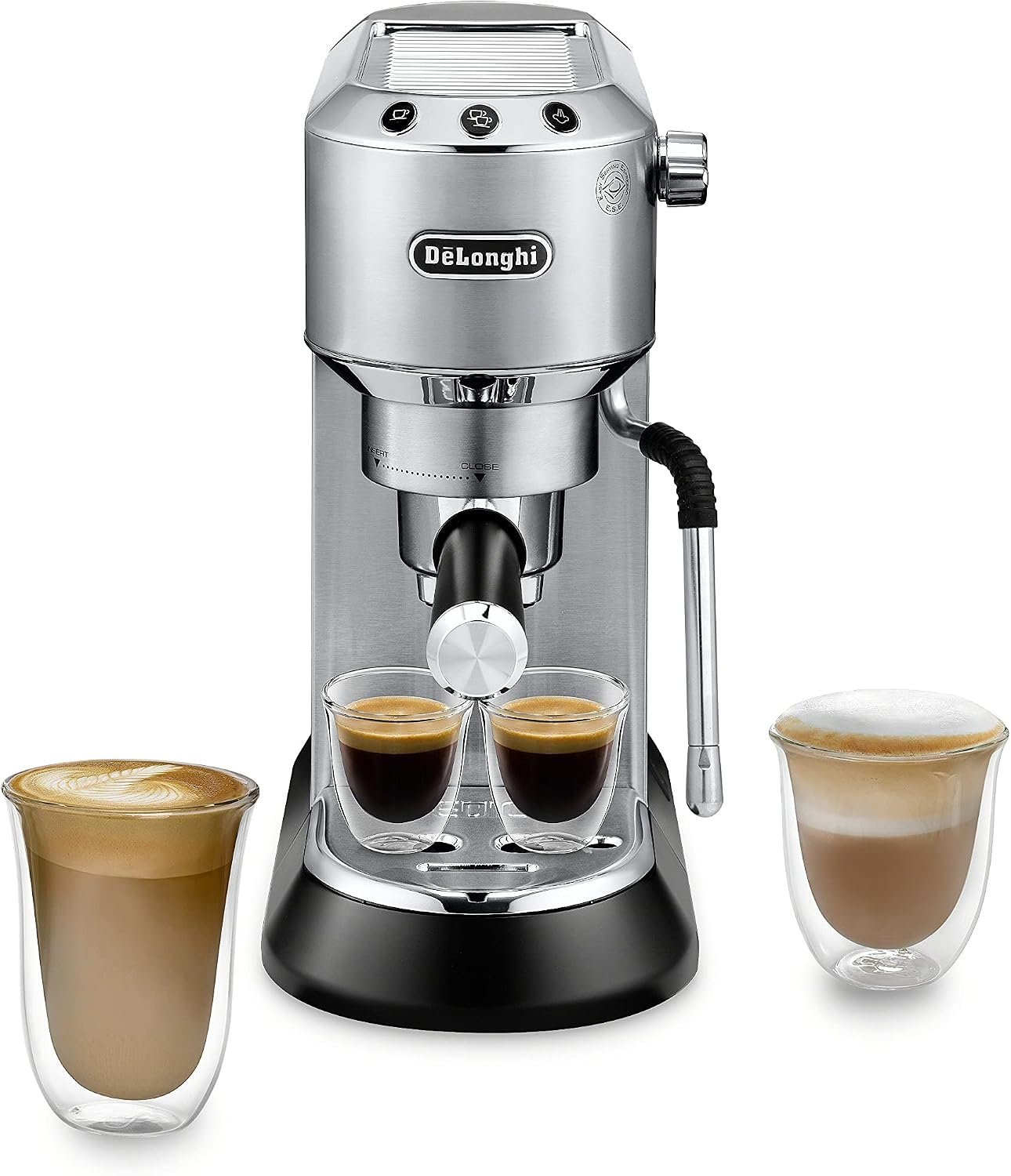
5. De’Longhi Dedica Arte — the espresso machine for tiny kitchens
The Dedica Arte is about 6 inches wide, narrower than most toasters, and small counters are its whole reason to exist. Unlike the base Dedica it swaps the push-button frother for a proper manual steam wand (De’Longhi calls it MyLatteArt), so real microfoam for lattes and flat whites is actually possible. Heat-up is around 40 seconds from the thermoblock, and temperature is managed electronically across three levels.
Pros:
- About 15cm (6 in) wide, made for small kitchens
- Proper manual steam wand for real microfoam
- ~40-second heat-up from the thermoblock
- Three electronic temperature levels
Cons:
- 51mm accessory ecosystem is smaller than 54mm or 58mm
- Stock baskets are pressurized
- No built-in grinder
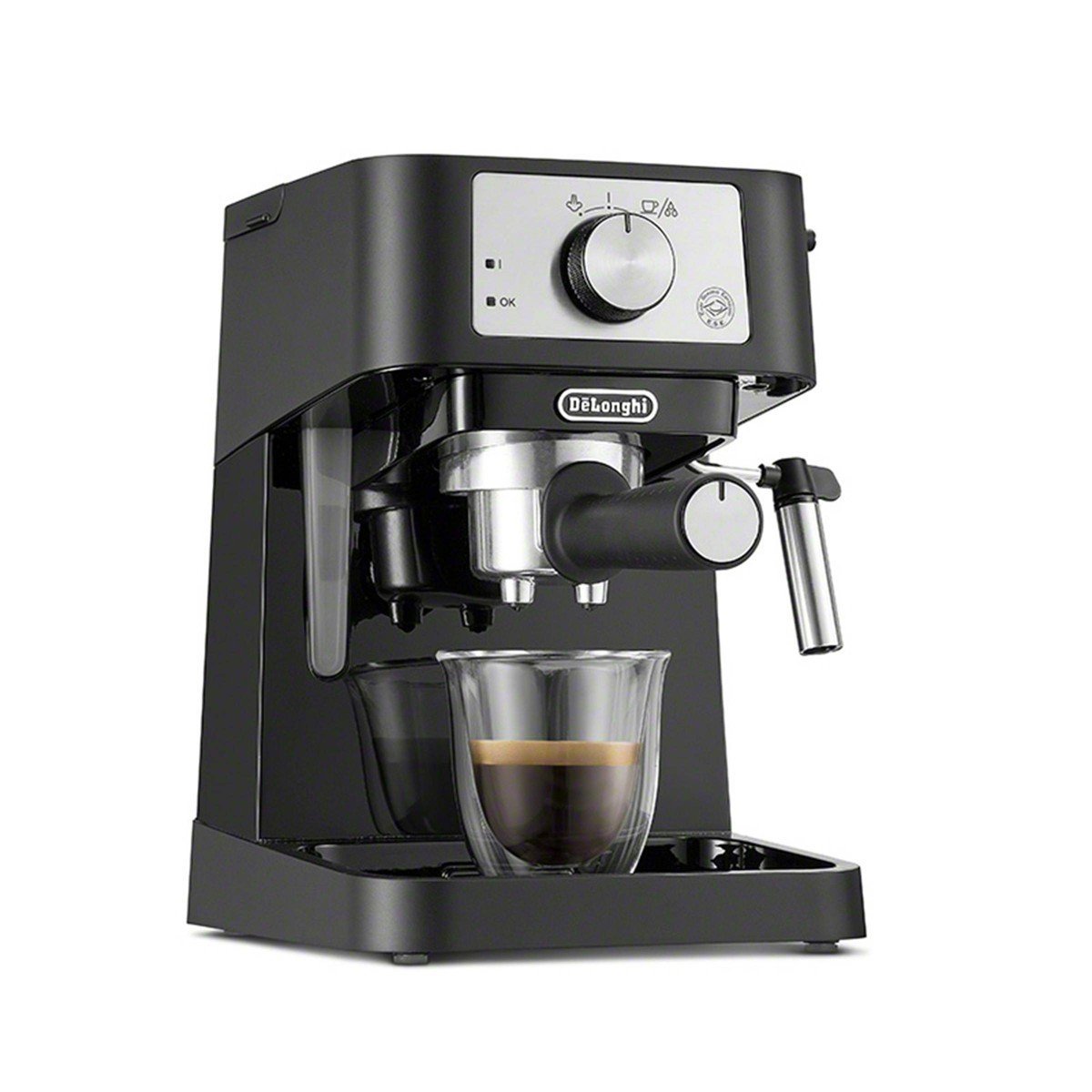
6. De’Longhi Stilosa EC260BK — the cheapest machine that is actually an espresso machine
Below about $100, most “espresso machines” are steam toys that cannot build real pressure. The Stilosa is the exception reviewers keep pointing at: a genuine 15-bar pump machine with a stainless steel boiler, a combination that is rare even at twice its roughly $100 to $150 street price. It is the machine to buy when the budget is firm and non-negotiable. Pressurized baskets forgive imperfect grinding while you learn.
Pros:
- Genuine 15-bar pump and stainless steel boiler for $100–150
- Pressurized baskets work with pre-ground coffee while you learn
- Compact 1L tank suits small counters
Cons:
- Panarello frother makes airy foam, not true silky microfoam
- Plastic build, no pressure relief valve
- No PID, no 3-way solenoid, no built-in grinder
What actually matters under $500
Ignore the bar number on the box. Espresso extracts at about 9 bars of pressure at the coffee puck. A “15-bar” or “19-bar” badge is the pump’s maximum rating, not a quality score. Every machine above extracts in the right zone.
Portafilter size decides your accessory future. 58mm (Gaggia) is the cafe standard with endless baskets, tampers and tools. Breville’s 54mm is close behind. 51mm (De’Longhi) works well but gives you fewer upgrade toys.
Boiler vs fast-heating systems is a lifestyle choice. The Gaggia’s brass boiler and the Stilosa’s steel boiler hold heat the traditional way and steam strongly, with warm-up time to match. Breville’s ThermoJet and De’Longhi’s thermoblock are ready in seconds to under a minute, which matters at 7 a.m.
The grinder is not optional. Fresh, evenly ground coffee is the single biggest shot-quality upgrade at any budget. If the machine budget is firm, our advice is the Stilosa or NEO Flex plus a good grinder over a $500 machine fed with stale pre-ground. And on the mornings espresso feels like too much work, a simple drip setup still has its place: see our best coffee maker for drip coffee guide.
Frequently Asked Questions
Do I need a separate grinder for these machines?
Yes, for best results. None of the six includes one. The Dedica Arte, Stilosa and NEO Flex (with its flow-control portafilter) include pressurized baskets that work acceptably with pre-ground coffee while you save up, but a burr grinder is the first upgrade to buy.
Is a 15-bar machine better than a 9-bar machine?
No. Espresso is extracted at roughly 9 bars at the puck. The higher number is the pump’s maximum capacity, and every machine on this list regulates down to the right extraction pressure.
Breville Bambino or Bambino Plus: which should I buy?
The espresso itself is effectively identical. The Plus adds automatic milk texturing, a bigger 1.9L tank and a stainless portafilter, and costs about $200 more. Milk-drink beginners: Plus. Espresso and americano drinkers: save the money with the regular Bambino.
Which of these is best for lattes and cappuccinos?
The Bambino Plus, because its automatic texturing is the only hands-free milk on the list. The Bambino and Dedica Arte are next with proper manual wands. The Flair NEO Flex cannot steam milk at all.
Why is the Gaggia version named so carefully?
Because the boiler changed. The current Classic Pro E24 uses an uncoated brass boiler. The earlier 2023 Evo Pro used a coated boiler that produced widespread flaking complaints. Buy the E24 and you skip that problem entirely.
Do these prices hold during Black Friday?
Espresso machines are among the most heavily discounted categories in Black Friday week, and several picks here (especially both Brevilles) routinely drop well below their list prices. Every machine on this page was under $500 at its normal street price when checked in November 2026, so a deal is a bonus, not a requirement.