

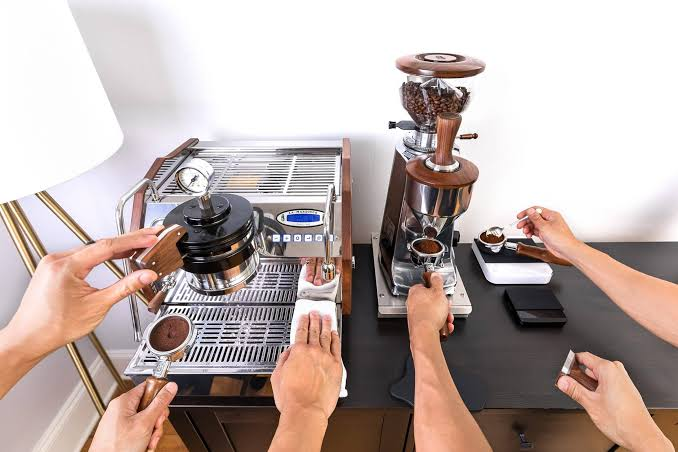


1. Breville Barista Express Espresso Machine, BES870XL
The Breville Barista Express remains one of the most popular all-in-one espresso machines for home baristas. It features an integrated conical burr grinder that grinds on demand to deliver fresh coffee directly into the portafilter. The digital temperature control (PID) ensures precise water extraction, while the powerful manual steam wand lets you micro-foam milk for latte art.
Read More On AmazonPros:
- Integrated conical burr grinder with dose control
- PID temperature control for consistent flavor
- Powerful steam wand for micro-foam texture
- Heavy-duty stainless steel build quality
- Includes full kit of accessories for beginners
Cons:
- Requires dialing in grind size for best results
- Takes up moderate counter space
- Single boiler requires short wait between espresso & steaming

2. De'Longhi Dedica Deluxe Espresso Machine, EC680M
If you are tight on kitchen counter space, the De'Longhi Dedica Deluxe offers a sleek 6-inch ultra-slim footprint without sacrificing brewing performance. It features a 15-bar professional pump and a rapid Thermoblock heating system that heats up in just 35 seconds. The adjustable frother allows you to customize steam levels for cappuccinos or lattes effortlessly.
Read More On AmazonPros:
- Ultra-slim 6-inch width fits tiny counter spaces
- Fast Thermoblock heating ready in 35 seconds
- Adjustable manual frother for milk customization
- Accommodates taller mugs with removable drip tray
- Affordable entry price for real espresso
Cons:
- No built-in grinder (requires pre-ground coffee or separate grinder)
- Lightweight body can shift when locking in portafilter
- Pressurized baskets limit advanced barista control

3. Gaggia Classic Pro Espresso Machine, RI9380/46
The Gaggia Classic Pro is an iconic entry-level commercial espresso machine built in Italy. It features a commercial-style 58mm chrome-plated brass portafilter and a commercial steam wand for professional-quality milk frothing. With distinct rocker switch controls and a solid stainless steel housing, it is built to last and highly moddable for coffee enthusiasts.
Read More On AmazonPros:
- Commercial-grade 58mm brass portafilter for superior heat retention
- Commercial two-hole steam wand for micro-foam
- Rugged all-metal body made in Italy
- 3-Way solenoid valve for easy, dry coffee puck disposal
- Highly durable with replaceable internal parts
Cons:
- Small water drip tray fills up quickly
- Slightly longer warm-up time compared to thermoblocks
- Requires a good espresso-focused grinder

4. Breville Bambino Plus Espresso Machine, BES500BSS
The Breville Bambino Plus brings high-end features to a compact footprint. Powered by the ThermoJet heating system, it reaches optimum extraction temperature in just 3 seconds. Its standout feature is the hands-free automatic steam wand, which purge-cleans itself and lets you select your preferred milk temperature and micro-foam texture automatically.
Read More On AmazonPros:
- Instant 3-second heat-up with ThermoJet technology
- Automatic hands-free milk texturing with temperature settings
- Auto-purge function cleans steam wand after use
- Compact design fits easily under low kitchen cabinets
- 54mm portafilter with 19 grams dose capacity
Cons:
- No hot water spout for Americanos
- Requires separate grinder
- Plastic tamper included in box is basic

5. De'Longhi Magnifica S Automatic Espresso Machine, ECAM22110SB
For those who want fresh espresso at the push of a button without manual portafilter work, the De'Longhi Magnifica S is a top fully-automatic choice. It grinds whole beans fresh for every cup with its integrated burr grinder, extracts the espresso, and discards the grounds automatically. It also includes a manual cappuccino system to steam milk easily.
Read More On AmazonPros:
- Fully automatic bean-to-cup operation at a button press
- Integrated 13-setting adjustable steel burr grinder
- Compact removable brew unit for easy cleaning
- Customizable coffee strength, temperature, and cup size
- Direct brewing minimizes mess and cleanup time
Cons:
- Higher price point than semi-automatic budget options
- Plastic exterior casing elements
- Requires regular descaling maintenance cycles